
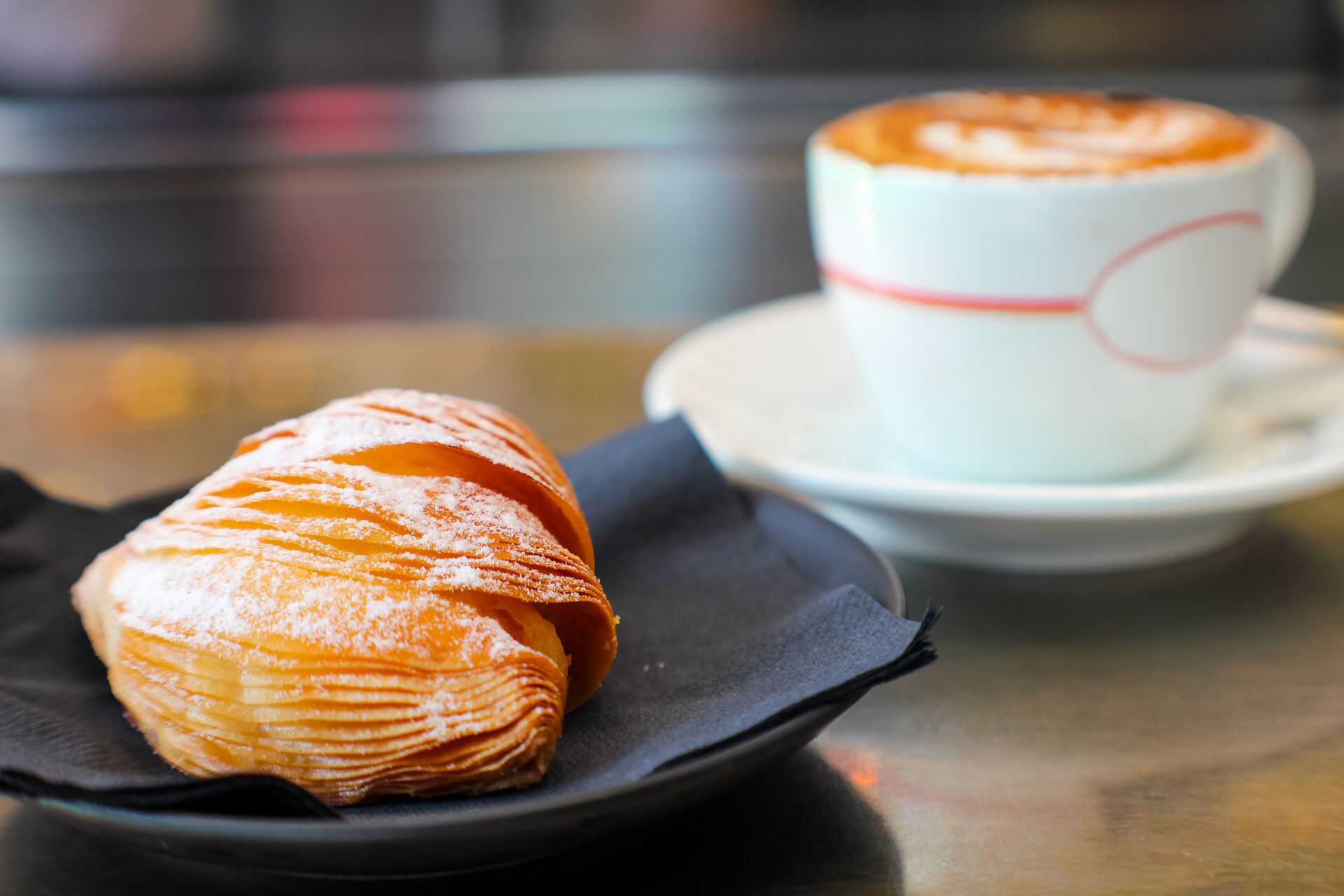
Sfogliatella: the Origin of Naples' Iconic Pastry
The origin of the sfogliatella on the Amalfi Coast
We are on the Amalfi Coast in the 1600s, in the monastery of Santa Rosa, inhabited by cloistered nuns who, by definition, had to avoid contact with the outside world as much as possible. For this reason they farmed the land, baked bread and invented recipes, even if the menus were usually very similar.
One day, however, something happened that changed the history of the monastery, of the coast and of all Naples, creating the right conditions for the birth of a new Neapolitan symbol. That day one of the nuns, named Clotilde, noticed some leftover semolina soaked in milk. She made an instinctive culinary decision: she mixed it with ricotta cheese, dried fruit and lemon liqueur, prepared a pastry and closed it with two sheets to resemble the shape of a monk's cap. The santarosa was born. The dessert was a success not only among the other sisters: it began to be offered to the people in exchange for a few coins, so it needed a name, and the nuns chose that of the convent where it was created.
The sfogliatella is born
It took almost 200 years for this delicacy to reach Naples. In 1818, Pasquale Pintauro came across it and was literally amazed. He decided to revise the recipe, converting his tavern in Via Toledo into a pastry shop and becoming a pastry chef himself.
In his version, Pintauro removed the cream and sour cherries from the filling and made the pastry thinner, so that it lost its monk's cap shape: thus the sfogliatella was born!
Plan your next programme with us: discover Naples and the Amalfi Coast and Signature experiences.